From Sweltering to Comfortable: How Open Cell Spray Foam Transformed a 24’x24’ Garage Workshop
When this homeowner first started using his 24’x24’ stick-built garage as a woodworking shop, he quickly ran into a major problem—temperature. Like many detached garages, the space was never designed with comfort in mind. In the summer, it felt like an oven. In the winter, it was uncomfortably cold. Working for extended periods simply wasn’t enjoyable.
That all changed with one upgrade: installing open cell spray foam insulation along the roofline.
The Problem: An Unconditioned Space
The garage had a traditional vented attic design with no insulation whatsoever. Heat built up rapidly under the roof during warmer months, radiating down into the workspace below. In the colder seasons, any warmth generated inside escaped just as quickly.
For a woodworking shop—where precision, comfort, and time spent inside matter—this created real limitations:
Tools and materials were affected by temperature swings
Glue and finishes became unpredictable
Long work sessions were uncomfortable
The space had potential, but it wasn’t usable year-round.
The Solution: Open Cell Spray Foam at the Roofline
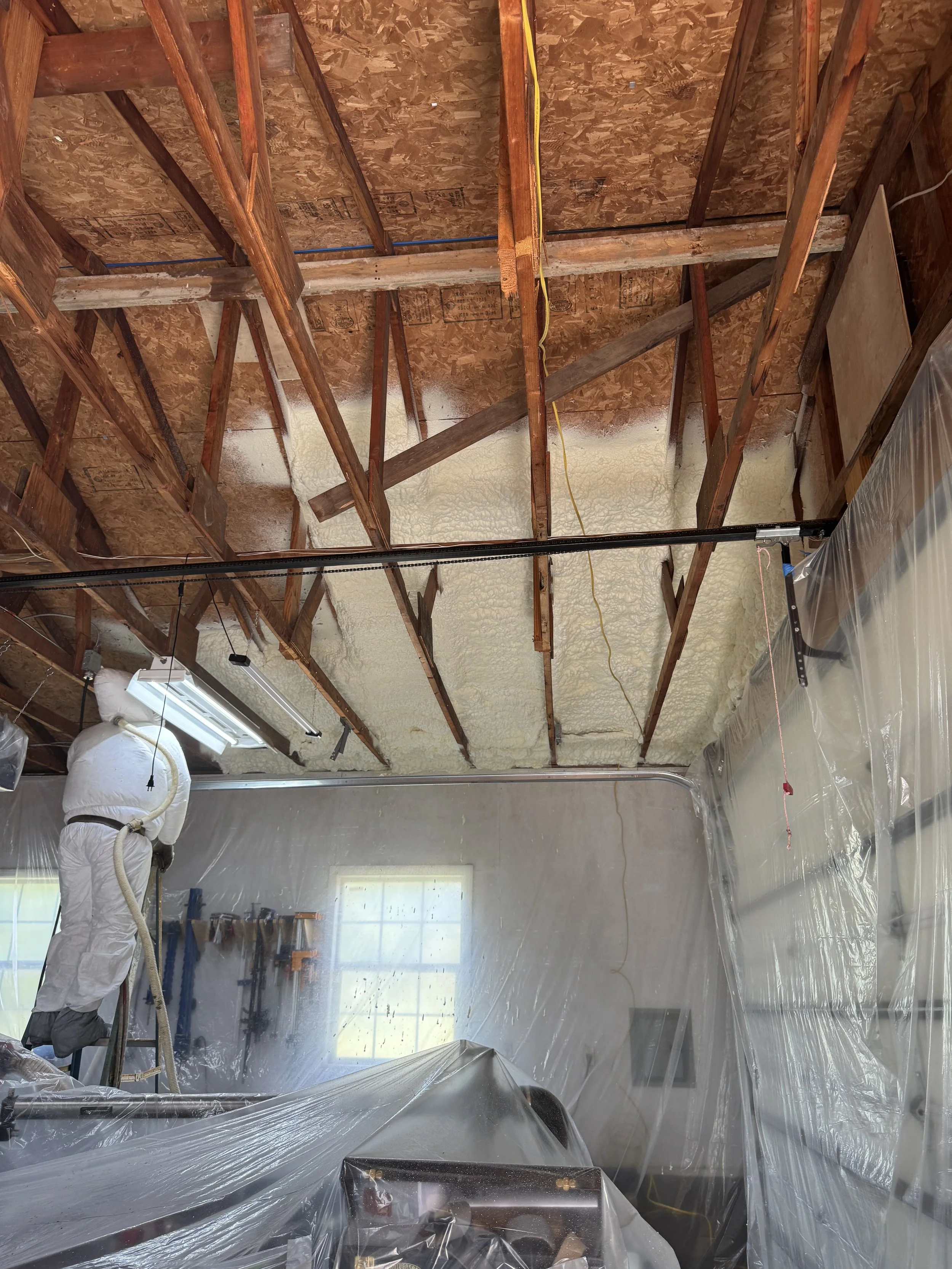
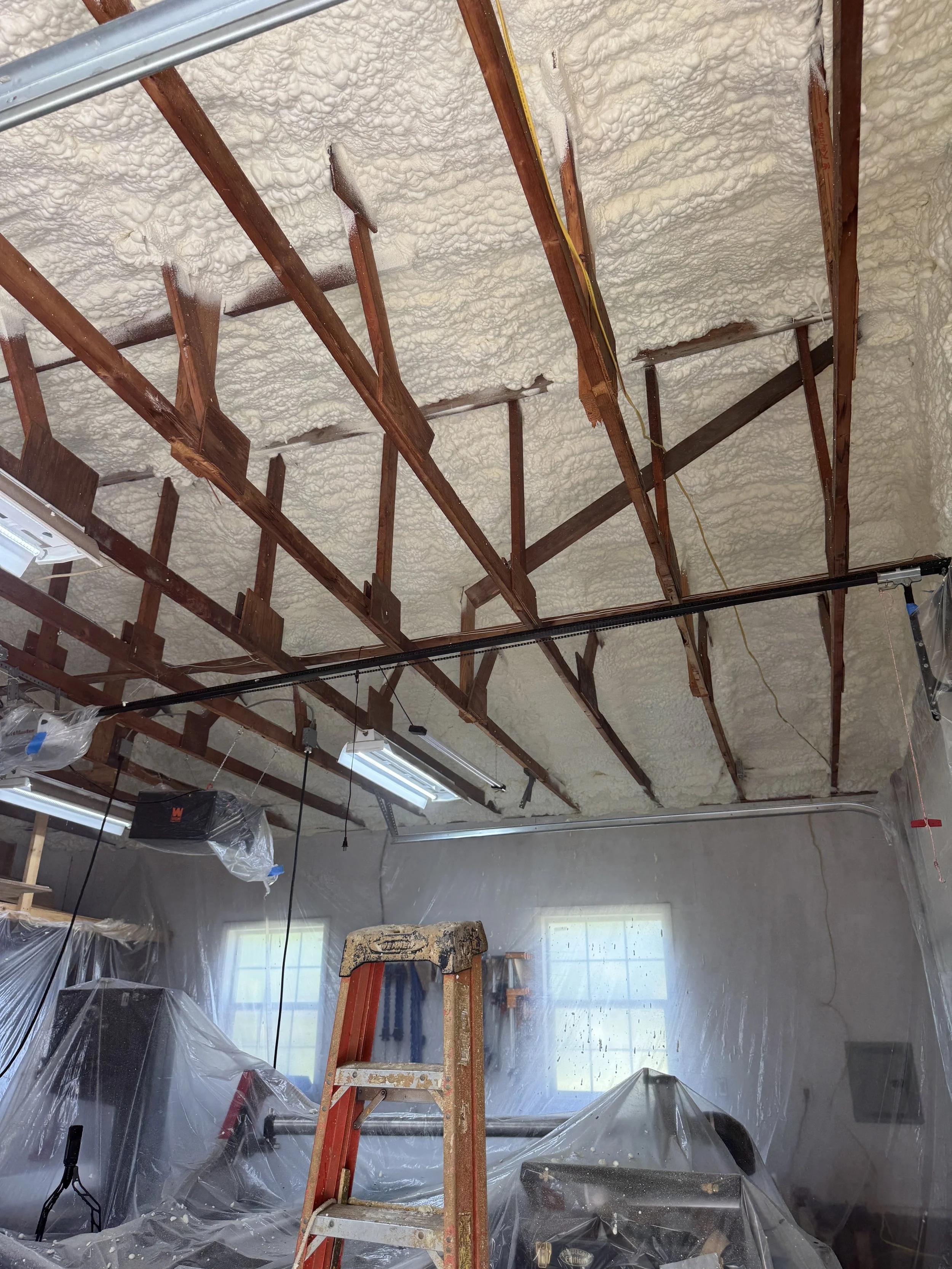
Instead of insulating the ceiling and leaving the attic vented, the decision was made to insulate directly along the roofline using open cell spray foam. This approach effectively brought the entire attic space inside the thermal envelope of the building.
Open cell spray foam was chosen because:
It expands to fill gaps and cracks, creating an air seal
It’s cost-effective for larger coverage areas like roof decks
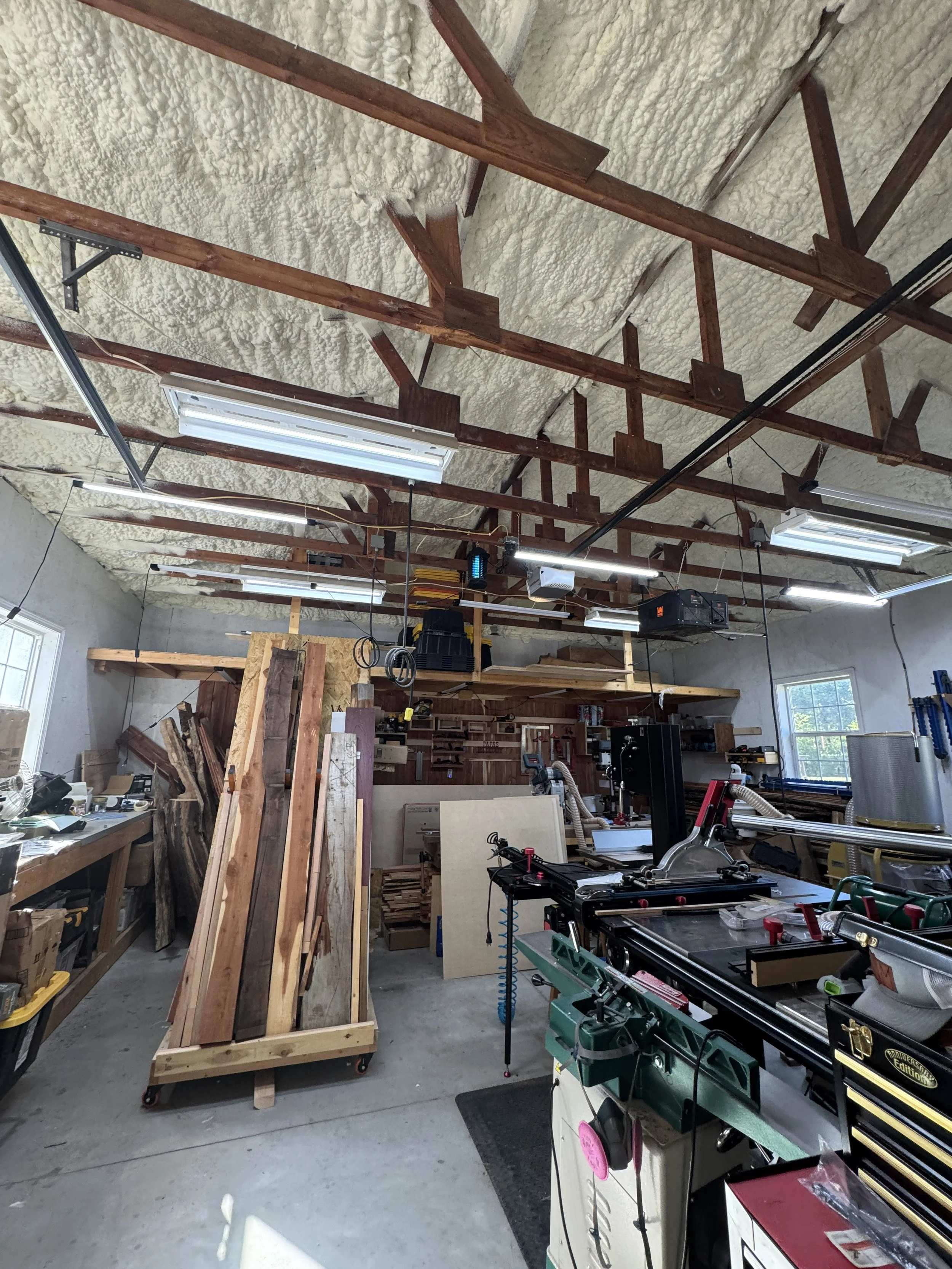
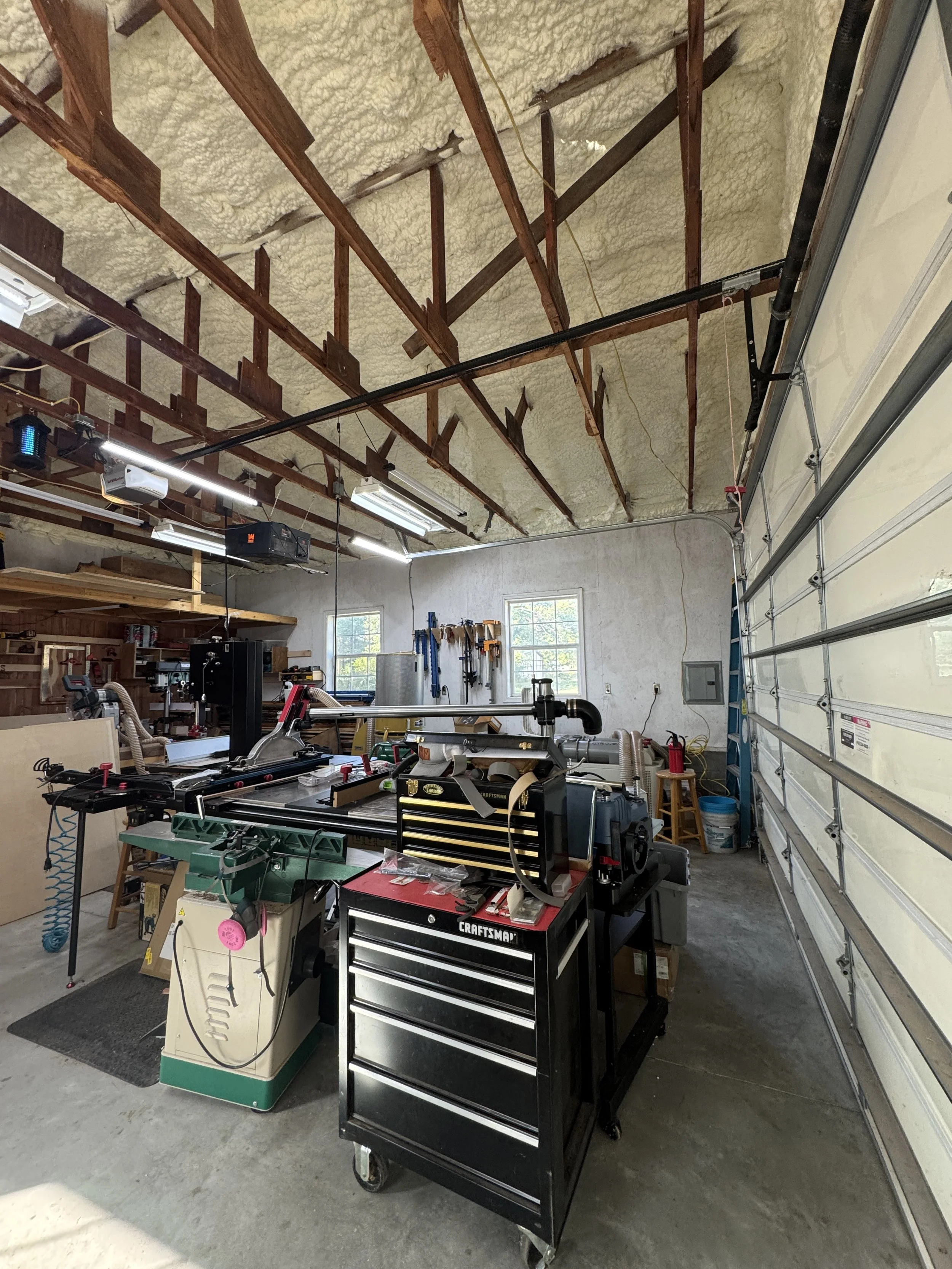
The installation involved spraying foam directly to the underside of the roof sheathing and along the rafters, covering all vents to the outside, sealing off air leaks, and eliminating the extreme heat buildup that previously occurred.
The Transformation: A Comfortable, Usable Shop
The difference was immediate and dramatic.
What was once a hot, stagnant garage became a temperate, consistent environment. The air no longer felt heavy or oppressive, and temperatures stabilized throughout the day. Even without significant heating or cooling equipment, the space became noticeably more comfortable.
Key improvements included:
Temperature Stability: Reduced heat gain in summer and heat loss in winter
Improved Air Quality: Less outside air infiltration, dust, and humidity swings
Better Working Conditions: Longer, more enjoyable time spent in the shop
Protection for Materials & Tools: Wood, finishes, and equipment are no longer exposed to extreme fluctuations
Why Roofline Insulation Works So Well
By insulating at the roofline we were able to eliminate the “hot lid” effect that plagues many garages and workshops.
Essentially, the entire structure has become more energy-efficient, the small 110v AC unit can keep up with the whole garage, and the space is just more pleasant to be in.
Final Thoughts
For anyone using a garage as a workshop, gym, or hobby space, comfort matters more than most people realize. This 24’x24’ woodworking shop is a perfect example of how the right insulation strategy can completely change how a space feels and functions.
Open cell spray foam didn’t just improve this garage—it unlocked its full potential.
Now, instead of avoiding the space during extreme weather, the homeowner actually enjoys being in it. And that’s what a well-insulated shop should do: make the space work for you, not against you.